
Cross-border wins: why ‘international’ no longer means pouring capital into an office
When people say a company has gone international, they often picture a gleaming office in New York or a paid-up subsidiary with a local HR team. The reality in 2026 is far more varied — and often far more creative. Recent success stories show the most durable international moves depend less on real estate and more on relational architecture: diaspora networks, purpose-driven partnerships, and pliable legal constructs that respect local norms.
This article traces tangible case studies where organisations scaled beyond borders not by cloning a head office but by building ecosystems. We interrogate three surprising plays that emerged repeatedly in the field: diaspora-enabled market entry, micro-joint ventures with community actors, and exportation of governance models rather than products. These case studies reveal practical, repeatable tactics for scaling internationally in the 2020s.
Case study: Kenyan fintech reaches Brazil via diaspora-led trust channels
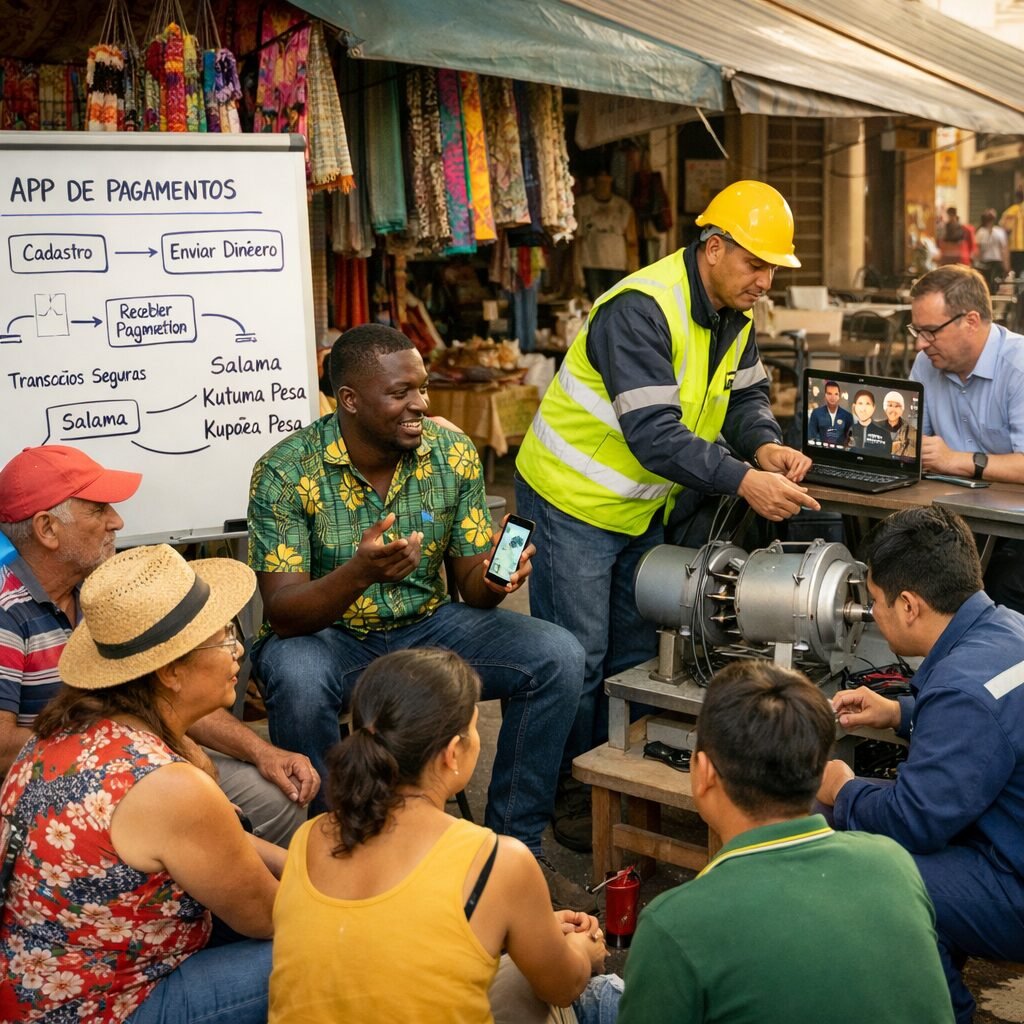
M-Pesa’s siblings — a cohort of East African fintech firms — have long experimented with international remittance corridors. One Nairobi-based startup found traction in São Paulo not by hiring a local sales team but by partnering with Kenyan and Nigerian diaspora associations that organise informal remittance pools and cultural events.
The startup established a two-pronged approach: it provided lightweight API integrations for existing community payment agents and ran financial literacy workshops at churches and cultural centres. Crucially, they accepted municipal-level regulatory constraints by deploying agent contracts written in Portuguese and Swahili and offering compliance training to local partners. Adoption grew through trust networks rather than advertising; within 18 months the startup reached 150,000 active users in Brazil and cut average remittance fees by 30% for its community corridors.
Lessons: leverage diaspora social capital, align product design with community workflows, and convert local intermediaries into micro-franchise partners rather than salaried staff.
Case study: a Welsh renewables co-operative scales to Vietnam through a skills-transfer joint venture
A small Welsh co-operative specialising in tidal micro-generators faced high capital barriers to siting installations abroad. Rather than exporting turbines, the co-op established a joint venture with a Vietnamese fishermen’s co-op. The agreement focused on skills transfer: Welsh engineers spent staggered three-month residencies training Vietnamese technicians in maintenance, while Vietnamese partners offered local sites and community labour arrangements.
Financing came from a blended package: local development grants, a UK environmental impact investor, and community bonds issued in Vietnam. The model emphasised shared ownership; revenue splits were governed by a transparent ledger accessible to all members. Within two years the joint venture had deployed five micro-grids powering coastal villages, increased household income by enabling fishing refrigeration, and created a replicable blueprint now used by a second Welsh firm entering South-East Asia.
Lessons: co-operative structures can lower trust deficits, skills-transfer is a sustainable export, and blended finance unlocks projects that pure equity cannot.
Case study: academic spinout exports governance, not just IP — from Oxford to Bengaluru
A university spinout from Oxford University had world-class sensor tech but struggled to scale manufacturing cost-effectively. Instead of offshoring production outright, the company partnered with a Bengaluru-based social enterprise that specialised in distributed manufacturing hubs. The spinout licensed its IP under a tiered model that included governance training, quality control protocols and shared R&D sprints.
This governance-export approach allowed the Indian partner to iterate product variants tailored to local clinics while maintaining a global standard through remote audit systems. The arrangement cut time-to-market for local customisations from 24 months to 8 months and generated a profitable licensing stream for the spinout. The relationship also created a pipeline of talent, as engineers from Bengaluru were seconded to the Oxford lab for short exchanges.
Lessons: scalable internationalisation can be built on exported governance frameworks; licensing with capacity building beats simple OEM contracts when local adaptation matters.
A playbook distilled: five repeatable tactics from real-world international wins
From the case studies above, five practical tactics emerge:
1. Partner through existing social capital: diaspora groups, co-operatives and faith organisations can act as demand aggregators.
2. Trade staff-heavy expansion for skills-transfer: training local partners creates local buy-in and lowers fixed costs.
3. Export governance, not just goods: a reproducible quality and reporting architecture allows local autonomy with global standards.
4. Use blended finance creatively: combine grants, impact capital and community bonds to match project risk profiles.
5. Build contracts for reciprocity: tiered IP licences, revenue-sharing and transparent ledgers reduce power asymmetries and accelerate trust.
These tactics shift the frame of “going international” from conquest to co-creation. They also make clear that measurable success often looks different depending on the context: slower revenue growth but deeper local resilience can be a superior outcome.
Where this approach succeeds — and where it can fail
These strategies are not universal panaceas. They work best where local actors have some organisational capacity and where regulatory regimes allow hybrid legal forms. Common failure modes include underestimating cultural governance costs, assuming a diaspora will mobilise without incentives, and neglecting exit clauses that protect local partners.
Mitigations are straightforward: invest in legal-design up front, pilot small with clear KPIs, and commit to reciprocity in both risk and reward. When done well, the model produces projects that are resilient to political shifts, difficult to copy by large incumbents, and more likely to generate sustained local impact.
Practical next steps for organisations ready to internationalise differently
Start with a rapid audit: map diaspora hubs, community organisations, and potential local JV partners. Build a minimum viable governance package — a concise set of quality standards, a licensing template, and a short training curriculum. Run a three-month pilot with explicit KPIs around user retention, local revenue share and skills transfer outcomes.
For further reading and implementation templates, organisations can explore open-source playbooks like the International Co-creation Playbook or consult networks such as diaspora business alliances that maintain searchable partner directories.
Conclusion: the new internationalism is about relationships — and repeatability
The most compelling international success stories of the past five years share a theme: they treated borders as layers of social and regulatory complexity to be navigated collaboratively, not simply obstacles to be bulldozed. By centring trust networks, skills transfer and governance exports, organisations can scale across countries in ways that generate durable local value. That is internationalism with a human face — and a replicable methodology.