
An Uncomfortable Premise: Why Look for Benefits?
Most people instinctively recoil at the notion of ‘benefits’ from war. Yet examining the past with a journalist’s detachment reveals recurrent patterns: destructive episodes that catalyse lasting, sometimes progressive, changes. This is not an apology for conflict; it is an attempt to understand how human systems adapt when pushed to extremes.
Seeing war as an accelerant helps explain why societies emerge with altered institutions, technologies and moral frameworks. The challenge is to extract lessons without romanticising suffering.
Technological Leapfrogs: The Accidental Engine of Innovation
Wars concentrate resources, attention and incentive structures in ways that peacetime rarely does. From radar and penicillin to jet engines and the internet’s military precursors, conflict has repeatedly hastened inventions that later diffuse into civilian life.
More recently, cryptography, GPS and drone technologies developed with military imperatives have seeded new industries and services. The hidden benefit here is not the weapon itself but the infrastructural spillover: research funding, standardisation and rapid trial-and-error cycles that otherwise might stagnate.
Social Restructuring: Progress Under Pressure
When men are conscripted and economies remade, social roles shift. The mass entry of women into factories in two World Wars irrevocably altered labour markets and accelerated suffrage movements. Wars have also reshaped class mobility — veterans returning home with training, pensions and new expectations pressured states to expand education and welfare systems.
These changes often outlast the conflict. In some cases, wartime necessity forced societies to confront inequities — creating institutional precedents (employment programmes, public health campaigns) that became foundations for postwar social policy.
Institutional Learning: How Failure Begets Better Governance
Defeat and crisis expose institutional weaknesses in ways slow decline cannot. Military loss, occupation or collapse often triggers profound bureaucratic and legal reforms: better civil-service practices, modernised tax systems and improved emergency planning.
Post-conflict reconstruction can therefore yield more competent governance structures. Internationally, the horrors of 20th-century wars prompted new legal architectures — from the Geneva Conventions to the UN system — that reconfigured norms governing state behaviour and human rights.
Cultural Renewal and Artistic Synthesis
Trauma and displacement foster cross-pollination. Migrant communities, forged by conflict, carry traditions into new urban hubs where they intermingle with local cultures. Jazz’s global spread, cinema’s narrative shifts and avant-garde art movements often trace roots to wartime dislocation.
Artists responding to war also reframe public conversation, creating mythologies and memories that societies use to process loss. This cultural renewal is a fragile benefit: it grows from pain, yet it can seed empathetic understanding and creative vibrancy.
Environmental Paradoxes: Recovery in Abandoned Landscapes
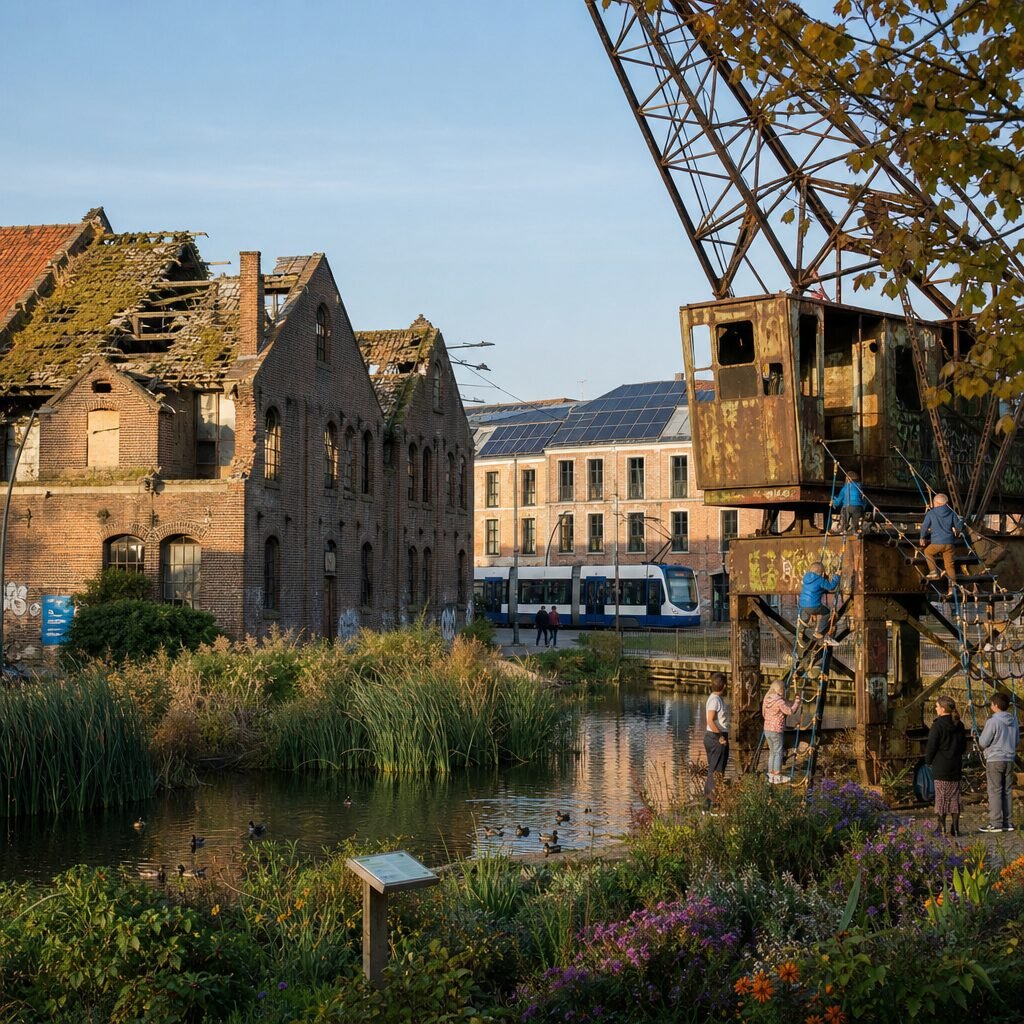
At first glance, war and environment are incompatible. Yet abandoned battlefields and depopulated borderlands sometimes become inadvertent havens for biodiversity. Chernobyl’s exclusion zone, for example, has seen surprising wildlife returns, while demilitarised buffers can act as ecological corridors.
Such phenomena remind planners that human absence can allow ecological processes to rebound, offering models for rewilding and conservation in post-conflict recovery strategies.
Diasporas, Networks and Global Commerce
Conflict-driven diasporas create dense transnational networks of trade, knowledge and finance. Refugee entrepreneurs frequently forge new supply chains and niche industries in host countries, linking markets that were previously disconnected.
These networks can become enduring engines of innovation and remittance flows, integrating economies and seeding cross-border entrepreneurship long after the original crisis has faded.
Ethical Reflection and Legal Memory
Exposure to wartime atrocities often provokes collective moral reckonings that reshape legal norms. The post-Second World War human-rights regime, tribunals for crimes against humanity and codified humanitarian law all trace to outrage at wartime excesses.
While born from horror, these legal innovations provide durable protections that constrain future violence and offer victims pathways to recognition and reparation.
A Final Caveat: Learning Without Glorifying
Identifying hidden benefits is not the same as endorsing war. The gains described are frequently accidental, unevenly distributed and purchased at enormous human cost. Responsible scholarship asks how societies can harness the adaptive mechanisms war reveals — rapid innovation, institutional reform, social inclusion — through peaceful, planned means.
If there is a constructive takeaway, it is this: understand the adaptive impulses war exposes and try to institutionalise them without the attendant carnage. That is the elusive lesson history offers.