
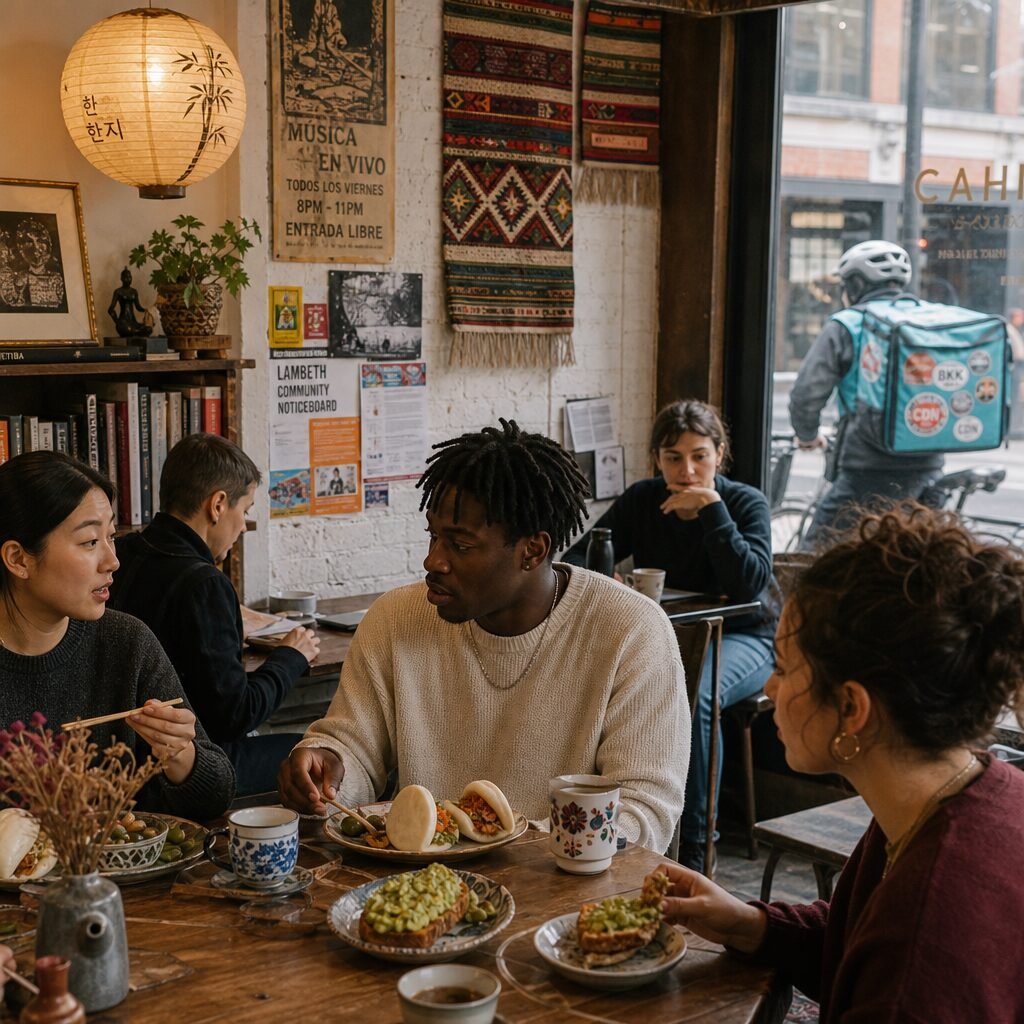
When ‘International’ Becomes a Lifestyle Verb
There is a quiet revolution in how we use the word international. Once a neutral descriptor of foreign affairs, transport links or trade agreements, ‘international’ now functions as a lifestyle verb: to international is to absorb, remix and normalise cultural signals from across the globe into everyday living. This shift isn’t merely semantic. It marks a behavioural turn in which people curate identities and routines around cross-border influences — from breakfast bowls borrowed from Tokyo cafés to evening playlists curated by DJs in Lagos.
This section explores the mental shift beneath trend charts. ‘International’ as an action denotes intentionality. It’s a deliberate selection of global cues that signal cosmopolitan belonging without the passport. That selection is shaped by platforms, micro-economies and aspiration. The result: a palate of hybrid tastes, home interiors that marry Scandinavian restraint with Indian textiles, and etiquette codes learned from subtitled dramas rather than grandmotherly advice.
Micro-Internationalisms: How Neighbourhoods Adopt Global Signals
Walk down many urban streets and you’ll see a new vernacular of place-making. Shopfronts stitch language, typefaces and colour palettes from different continents into a coherent local aesthetic. These micro-internationalisms are not the homogenous global brands of old; they are bespoke — a Colombian bakery that adopts Japanese pastry technique, a bar that serves South Korean anju alongside British ales, a barber using West African patterns in its interior.
The effect is subtle but pervasive. Locals begin to read their neighbourhoods as globally connected, and newcomers use these cues to map social belonging. Small businesses act as translators: they curate foreign techniques and tastes into objects and services that feel immediately usable. This creates an intimacy with international culture that is tactile, daily and, crucially, economic — it converts distant practices into items people will pay for and incorporate into routines.
The Timezone Economy: How Asynchronous Life Redraws Rhythms
Remote work, global creators and international customer bases have produced a new economy of time. The timezone economy reorders daily life: the morning run might end with a Slack thread that began in São Paulo, while an evening class is taught live from Seoul. Asynchronous collaboration doesn’t just change when we work; it alters how we conceive of marked time — brunch culture extends, nights fragment, and the 9-to-5 recedes.
This temporal blending fosters hybrid rituals. People create personal circadian architectures to suit their international networks: naps as strategic productivity tools, curated ‘work windows’ aligned to client timezones, and social hours that migrate to match overseas friends. Time becomes a landscape to be navigated rather than a uniform grid to obey — an interior lifestyle shift with global causes.
Passport Aesthetics: Brands, Citizenship and Symbolic Mobility
In the 2020s, brand language has adopted passport-like cues. Labels deploy stamps, languages, and fractional national narratives to imply pedigree and belonging. This ‘passport aesthetics’ confers symbolic mobility: a handbag described as ‘Mediterranean-inspired’ becomes a micro-claim to continental culture; a tea brand listing villages across continents promises authenticity and global care.
Beyond commerciality, passport aesthetics influences personal presentation. People assemble wardrobes, playlists and social feeds that read like soft passports — curated to communicate mobility, curiosity and openness. The paradox is that symbolic mobility can be a status marker as potent as actual travel, reinforcing new forms of cultural capital built from signs rather than journeys.
International Rituals: Calendars, Ceremonies and Shared Moments
Global media and diaspora networks have multiplied ritual calendars. Lunar New Year events in London, Holi colour runs in Berlin, and Día de los Muertos vigils in Tokyo are not mere replications; they are local reworkings that create shared emotional rhythms. Social platforms accelerate the spread of ritual templates — hashtags, filters and step-by-step formats make participation legible and low-friction.
These rituals do more than entertain. They create cross-border empathy and common reference points. Yet they also raise questions about appropriation versus appreciation. Some practices are thoughtfully integrated and sustained by community members; others are surface-level performances. The future of international rituals depends on who curates them and how power and provenance are acknowledged.
The New Localism: How Global Inputs Produce Distinctly Local Outcomes
Counterintuitively, international influences often intensify local distinctiveness. When a city absorbs disparate global inputs, its inhabitants recombine them in singular ways. The result is a ‘new localism’ where global components are stitched into place-specific logics: a market in Marseille that blends North African spice profiles with Provençal produce, a neighbourhood in Mumbai that remixes Scandinavian minimalism with Marathi craft.
This creative recombination privileges improvisation over imitation. Local makers take the raw materials of internationalism — techniques, ingredients, rhythms — and fold them into existing social practices, producing outcomes that are legible to insiders but unfamiliar elsewhere. The new localism reframes international influence not as dilution but as enrichment.
Challenges and Ethics: Who Benefits from Being ‘International’?
Not all faces of internationalism are benign. Global cultural exchange can amplify inequalities when gatekeepers decide which influences are legible and marketable. There is a commerce-driven tendency to extract and repackage cultural forms without reciprocal benefit to origin communities. Digital platforms amplify viral moments while obscuring provenance and authorship.
Ethical international living requires intentionality: credit where it’s due, equitable economic relationships, and preservation of context. Policy and platform design matter too. Initiatives that support cross-border artist residencies, fair-trade cultural collaborations and open licensing can tilt the balance toward reciprocity rather than extraction.
What Comes Next: Reimagining the International for Everyday Life
Looking ahead, international influence will likely deepen in the intimate domains of habit and hearth. Expect design systems that adapt to multi-continental households, calendar apps that suggest rituals from several cultures, and education that teaches people to navigate cultural codes with nuance. Technology will continue to scaffold new forms of belonging — but the most interesting innovations will be social and civic: neighbourhood alliances that sustain migrant crafts, schools that teach cultural fluency, and local media that profiles cross-border collaborations.
Ultimately, the most sustainable form of international influence may be reciprocal curiosity: practices that open without consuming, that invite exchange while respecting origin. When international is practised as a verb of care rather than conquest, it reshapes not just aesthetics but ethics, turning global proximity into durable social wealth.