
Introduction: An Unlikely Catalyst
War is usually framed as a story of loss, displacement and destruction. Yet beneath the rubble and headlines, conflicts repeatedly create local economic ecologies that tilt in unexpected directions. This article examines how wartime conditions — through demand shocks, supply chain ruptures and social reorganisation — can inadvertently empower small businesses and entrepreneurs. The aim is not to glorify conflict, but to explore the nuanced ways people adapt, innovate and sometimes thrive when systems around them collapse.
Across modern theatres of conflict from Ukraine to Syria and parts of Africa, entrepreneurs have responded to acute needs with rapid, often improvisational solutions. The resulting businesses are shaped by urgency: speed of delivery, resourcefulness and new forms of community trust. These traits frequently persist beyond immediate crisis, seeding longer-term enterprises and new market niches.
Demand Shock as an Opportunity Engine
Wartime demand shocks reconfigure customer needs almost overnight. Goods that were once peripheral become essential — from portable power solutions and water purification to protective clothing and low-tech medical devices. Small businesses, unburdened by the inertia of large corporations, are quicker to prototype and distribute these items.
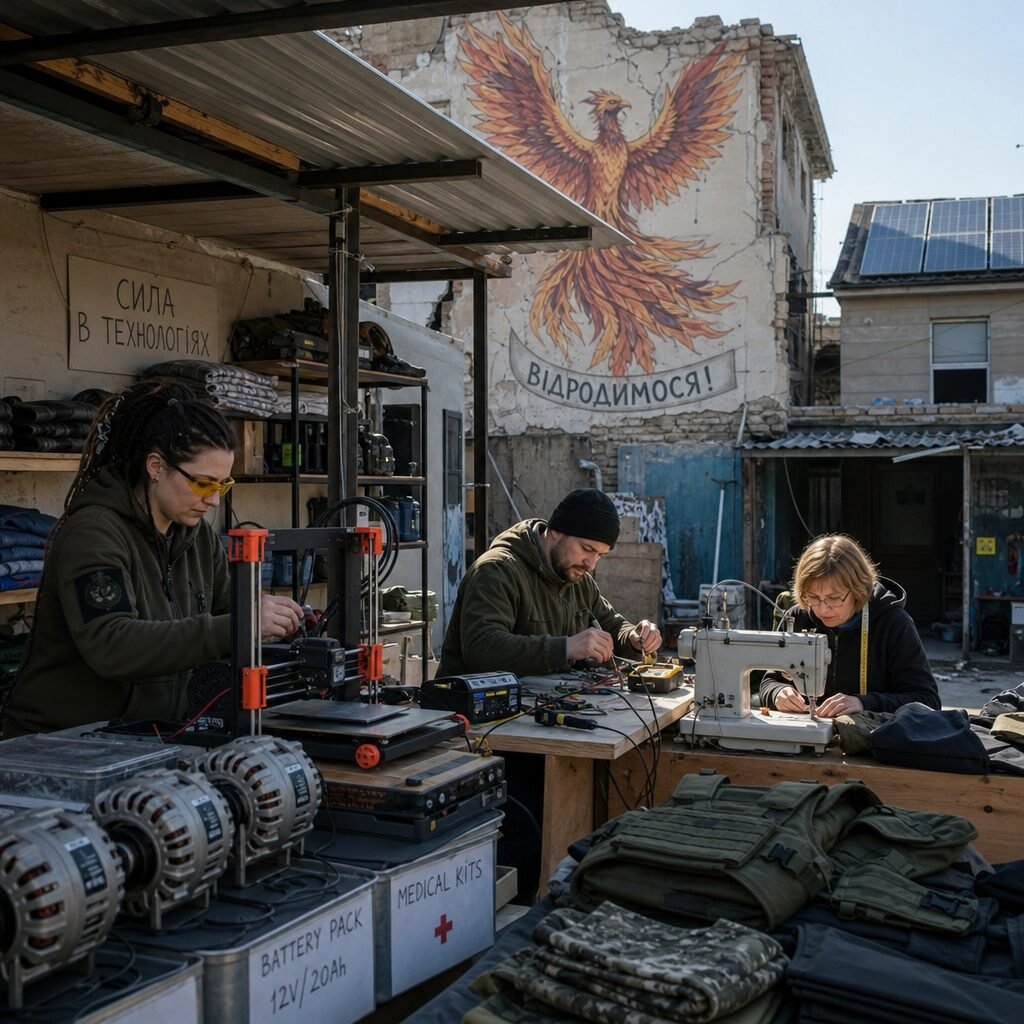
For example, independent engineers and makers in conflict zones have repurposed automotive alternators into microgrid generators, while tailor collectives pivot to produce ballistic-grade clothing. These micro-innovations often begin as low-margin, high-impact survival services, but they establish brand recognition and technical capability that translate into peacetime markets.
Networks of Trust: Informal Markets and Social Capital
When formal institutions falter, informal networks grow denser. Wartime fosters new trust architectures — neighbours pooling resources, barter systems, community-run logistics. Entrepreneurs who embed themselves within these networks gain privileged access to information, materials and distribution channels.
This social capital becomes a competitive advantage. A baker who delivers goods alongside humanitarian convoys, or a small logistics firm that arranges safe passage for medical supplies, accumulates reputational equity that can be monetised later through consulting, supply contracts or franchising. In many cases, these entrepreneurs become the connective tissue rebuilding local economies after conflict.
Frugal Innovation and the Rise of the Maker-Economy
Wartime constraints accelerate frugal innovation — the art of doing more with less. Limited access to imported components forces resourceful solutions: 3D-printed prosthetics, open-source drone retrofits for crop surveying, and battery swapping systems for electric scooters. These innovations often circulate via online communities and local maker spaces, spawning micro-industries.
The maker-economy born of conflict is not purely subsistence-driven. It cultivates transferable skills in digital fabrication, repair and reverse engineering. Post-conflict reconstruction tends to favour these nimble capabilities, and entrepreneurs who mastered them during war are well-positioned to win contracts in rebuilding efforts and in the global market for low-cost innovation.
Regulatory Vacuums and the Entrepreneurial Wild West
The breakdown of regulation can be double-edged. On one hand, it allows rapid experimentation: new fintech platforms for peer-to-peer transfers emerge when banks freeze, and informal building codes enable adaptive reuse of structures. These grey zones invite entrepreneurs to test services free from bureaucratic friction.
On the other hand, absence of oversight can entrench predatory practices. The enduring lesson is that humane, resilient entrepreneurial ecosystems require channels to transition from informal to formal: incubators, microfinance, and legal aid that translate wartime innovations into regulated, scalable businesses. Successful transitions often hinge on local NGOs and diaspora investors who broker legitimacy and capital.
Diaspora Capital and Knowledge Flows
Diaspora communities frequently act as financiers, mentors and market bridges. During conflict, remittances shift from household support to seed funding for startups addressing urgent needs. Diaspora entrepreneurs channel technical knowledge, regulatory know-how and consumer contacts back into their homelands, accelerating professionalisation.
Platforms such as crowdfunding and blockchain-based remittance tools have been adopted to reduce friction and increase transparency. These flows are not merely financial: they carry managerial practices, marketing expertise and corporate governance models that help wartime-born enterprises scale and integrate into international value chains.
Case Studies: From Makeshift to Mainstream
Ukraine: Small firms repurposing military-grade materials into furniture and safety equipment found new export markets after infrastructure stabilised. Rapid prototyping hubs that supplied drones and medical kits during the conflict evolved into tech startups attracting European investors.
Syria: Tailoring workshops that began producing protective garments for civilians transformed into certified PPE manufacturers for global buyers, leveraging diaspora networks for distribution.
East Africa: Community-based water purification enterprises that began as emergency responses formalised into social enterprises, winning contracts with NGOs and local governments for rural water provision.
Ethics, Sustainability and the Risk of Exploitation
It is crucial to acknowledge the moral complexity. Economic opportunity arising from conflict can create perverse incentives that prolong instability, and not all actors benefit equally. Women, displaced populations and minorities often face barriers to capital and market access.
Policy makers and philanthropists must therefore design interventions that prioritise equity: grants rather than predatory loans, training programmes tailored to marginalised groups, and legal aid to help informal enterprises formalise without losing local accountability. Ethical entrepreneurship in wartime contexts should aim to rebuild social fabric, not merely profit from chaos.
From Crisis-Born Enterprise to Resilient Economies
The most enduring wartime businesses are those that convert improvisation into institutional learning. Entrepreneurs who document processes, share open-source designs and invest in workforce training increase the likelihood that wartime gains become peacetime assets.
International actors can accelerate this by supporting hybrid incubation models that combine emergency relief with enterprise development. Programmes that connect conflict-born entrepreneurs to procurement pipelines, export facilitation and certification bodies can transform short-term survival businesses into engines of regional recovery.
Conclusion: Reframing the Narrative
War does not create opportunity in any noble sense, but it does force rapid adaptation. Recognising how small businesses and entrepreneurs mobilise in these conditions reveals pathways to rebuild more inclusive, resilient economies. The challenge for policy and philanthropy is to harness that inventive energy ethically, ensuring that crisis-born innovation becomes a foundation for long-term recovery rather than a symptom of persistent instability.
For readers seeking further reading on entrepreneurship in conflict zones, institutions such as the International Institute for Environment and Development and the Innovations for Poverty Action publish case studies and programme evaluations that document these dynamics in detail.