
The Cartographers of Memory: How Families Map War Across Generations
When war enters a family it rarely leaves a neat timeline; it becomes a palimpsest where stories are rewritten with each generation. In Belfast, a granddaughter traces a faded pencil line on an old ration book and discovers the route her grandfather took home after 1945. In Beirut, a son annotates the margins of his mother’s letters, connecting place names to streets now redrawn by reconstruction. These domestic acts of mapping are less about geography and more about identity—an attempt to turn trauma into a navigable landscape.
Families have become the unofficial archivists: stitching together photos, oral recordings and objects to create living maps. These maps often contradict official narratives, revealing detours, hidden shelters and small acts of kindness. The work is painstaking and intimate, a type of cartography that insists the human scale matters. Where governments produce strategic maps, these domestic charts chart the path from survival to belonging, showing how people rebuild a sense of home from fragments.
Letters, Voicemails and the New Afterlives of Words
Words have an afterlife. A hurried letter from a frontline trench, a voicemail saved on an old handset, a message scrawled in the margins of a sketchbook—these are the ways voices persist. In Kyiv, families have digitised hundreds of analogue messages left by soldiers to preserve tone, pauses and inflection that typed transcripts erase. Those pauses can reveal doubt, tenderness and the mundane concerns that anchor a person to life beyond the battlefield.
This rematerialisation of voice has legal, emotional and artistic consequences. Lawyers use preserved voicemails as evidence in tribunals; artists sample them in installations that make the listener confront the ordinariness of those sent to fight. The unexpected result is a democratisation of testimony: modern technology allows private utterances to become public memory, altering how societies remember conflict.
Veterans as Gardeners: Cultivating Peace with Soil and Routine
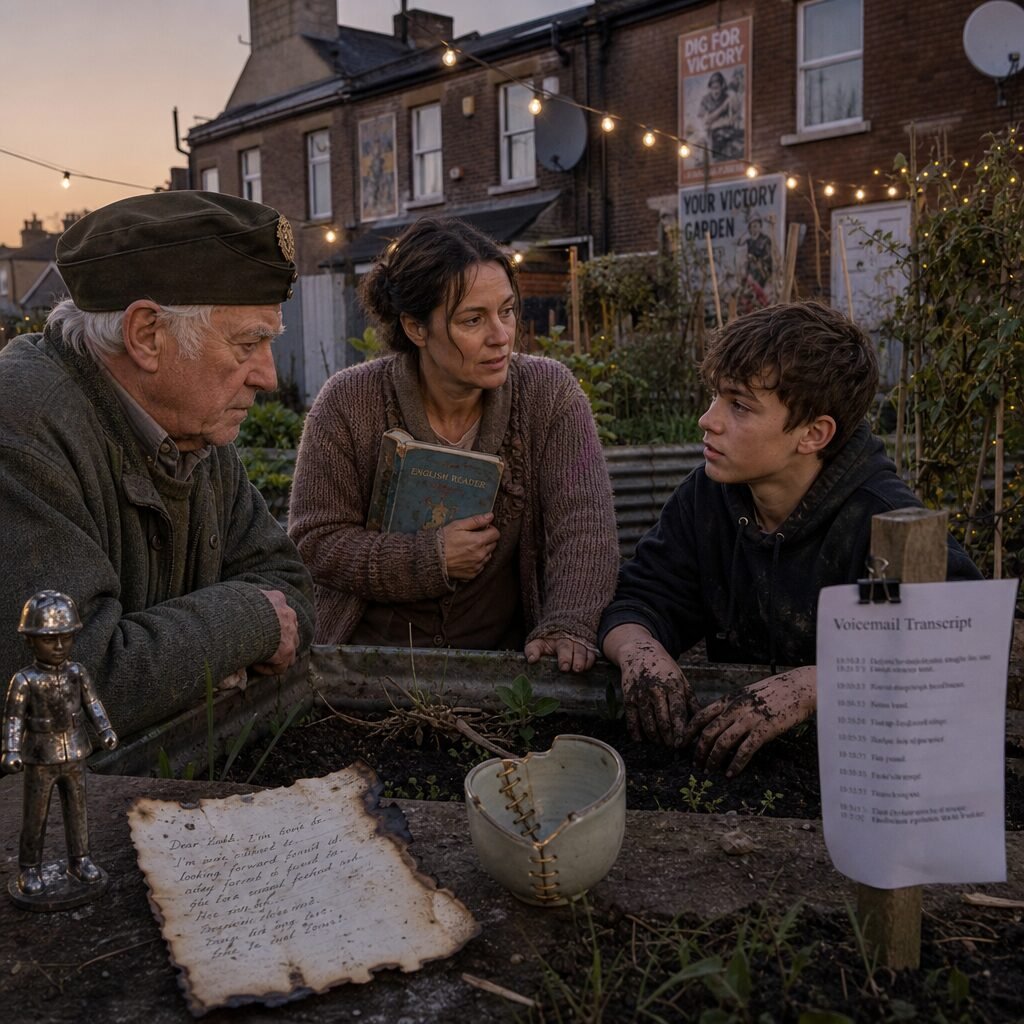
For many veterans, recovery arrives not through therapy alone but through repetitive, grounding tasks: tending a vegetable plot, pruning roses, or restoring an allotment. In Sheffield, a group of former soldiers transformed a derelict council plot into a community garden. The daily rituals—watering, weeding, watching seedlings germinate—offer a rhythm that counterbalances intrusive memories.
Gardening has become a social therapy. It offers measurable outcomes, shared responsibility and the chance to nurture life rather than end it. Academics are beginning to document how horticulture stabilises sleep patterns and reduces hypervigilance. More than rehabilitation, these gardens become microcosms of reconciliation: neighbours who once clashed over ideology now exchange cuttings and recipes.
The Repairers: Craftspeople Rebuilding the Tangible Remains of War
War leaves broken objects as stubborn witnesses. A bullet-riddled violin, a shattered icon, a tattered school uniform—these are repaired by artisans whose work is both technical and ceremonial. In Sarajevo, a restorer uses traditional stitching techniques to mend a child’s book scorched during the siege; in Aleppo, stone-masons recarve facades using ancestral methods to match ruined heritage sites.
The repairers do more than restore objects; they negotiate with memory. Their choices—what to mend visibly, what to conceal—shape collective narratives. A seam left imperfect, a patch clearly different, signals that loss has been acknowledged rather than erased. These visible repairs can be a form of ethical remembrance, allowing communities to hold both ruin and resilience in view.
Children in Conflict: Play as a Topography of Survival
Children do not simply suffer war; they make it legible through play. In refugee camps from Cox’s Bazar to Odesa, kids map their worlds with games that appropriate military language and tools—using toy guns to create rules or turning rubble into castles. Researchers argue these games are not mere mimicry but active processing: play becomes a rehearsal for safety, a way to test boundaries and retell trauma in controllable forms.
Programmes that integrate structured play with creative storytelling have shown surprising outcomes. Children who narrate their games can gain distance from fear, reframe their role from passive victim to agentic storyteller, and rebuild a sense of future. These narrative practices become portable lifelines, carried into adulthood as methods for interpreting risk and imagining peace.
The Digital Mourning Room: Online Rituals and the Ethics of Public Grief
The internet has produced new rituals for mourning: hashtags as memorials, virtual candlelight vigils, and interactive timelines where users pin photographs and testimonies. Sites like International Committee of the Red Cross and museums such as the Imperial War Museums host digital collections that invite public participation. These platforms democratise memorialisation but also raise ethical questions about consent, commodification and the permanence of grief online.
Families increasingly curate their loved ones’ digital legacies, balancing the desire to share with the need to protect dignity. The public display of personal loss can generate solidarity across borders, yet it can also expose intimate pain to political manipulation. The crucial insight is that online spaces are becoming contemporary cemeteries—places that require ethical stewardship as much as design.
Reconciliation as a Slow Manufacture: Small Acts, Long Timelines
Reconciliation rarely announces itself with treaties. Instead, it is manufactured slowly through countless quotidian acts: a shared cup of tea between neighbours, a repaired fence, a child learning the language of the other side. Anthropologists studying post-conflict villages in the Balkans and East Africa describe reconciliation as an infrastructure that must be built—trained mediators, community projects, joint schools—rather than an abstract virtue.
This reframing places human stories at the centre: reconciliation is less a policy than a craft. It privileges daily gestures and the patient work of trust-building. When policy-makers recognise this, funding and programmes shift from headline-making initiatives to long-term investments in social rituals that truly reweave the fabric of everyday life.