
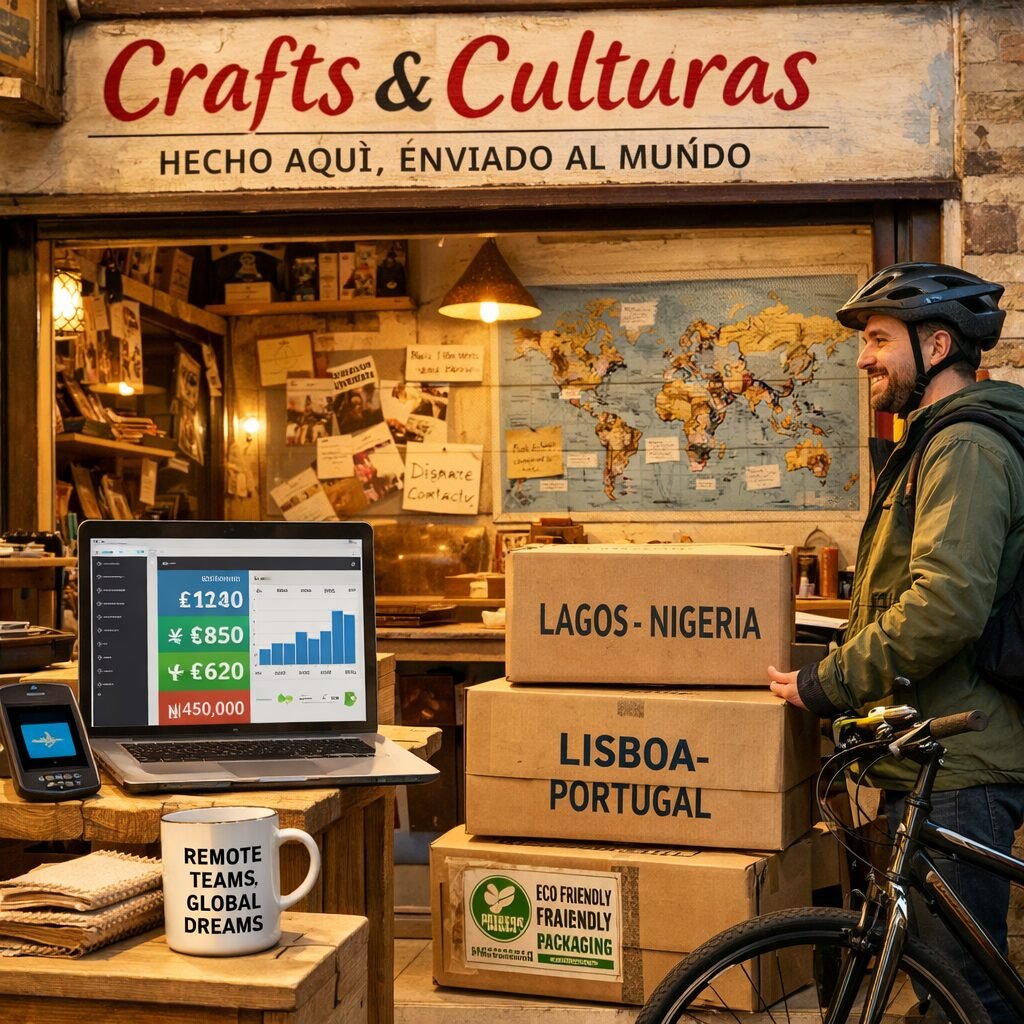
The Quiet Revolution: Small Firms Thinking International First
In the last decade, ‘international’ stopped meaning a distant export office or a five-year plan. For many entrepreneurs it has become an immediate strategy: build abroad from day one. Small firms are designing products and services with global customers in mind, using English-language marketplaces, freemium models and remote-first operations to test demand across borders within weeks rather than years. This shift challenges the old growth arc — where you succeed at home and then expand — and replaces it with a lean, parallel experiment model. The result: faster product-market fit and diversified revenue streams that reduce dependence on any single economy.
This approach is powered by low-cost cloud tools, cross-border payments, and accessible logistics partners. It also changes the entrepreneurial mindset: founders become cultural interpreters, crafting offerings that can be tweaked for multiple markets rather than rigidly scaled. The international imperative, then, is not merely about geography but about modularity — the ability to swap language, pricing and fulfilment without rebuilding the business.
Diaspora Networks as Invisible Export Agencies
Diaspora communities operate like informal export promotion agencies for small businesses. Migrant entrepreneurs and transnational consumer networks provide instant focus groups, distribution channels and trust signals in foreign markets. A UK artisan chocolate maker, for instance, can find a foothold in Lagos or Toronto through community events, social media groups and local diaspora retailers long before engaging with traditional export bureaucracy.
These networks lower market-entry costs and offer cultural intelligence that no market report can replicate. Entrepreneurs who harness diaspora ties often skip the expensive stage of ‘finding the right distributor’ because the community supplies micro-retailers, pop-up spaces, and word-of-mouth ambassadors. Governments and accelerators have started to recognise this phenomenon and are experimenting with diaspora-focused trade missions and digital platforms that connect diaspora buyers to small producers; entrepreneurs who learn to map these human networks gain outsized advantage.
Micro-Multinationals: Scaling by Slicing Markets
Rather than becoming a global giant, some small businesses choose to be micro-multinationals — operating multiple, lean legal entities tailored to specific markets. This structure allows entrepreneurs to optimise tax, compliance and cultural fit without the overhead of a single, centralised multinational corporation. Each entity is small, nimble and often run by local partners, but they share product IP, brand guidelines and centralised services like customer support or warehousing.
Micro-multinationals tap into modern tools: virtual bank accounts, marketplace storefronts, fractional local leadership and cross-border fulfilment-as-a-service. They also exploit regulatory variation creatively — not to evade responsibility but to adapt operations to local realities, such as differing labour regulations or environmental standards. The surprising insight here is that international complexity can be an advantage: nimble fragmentation reduces risk and increases local responsiveness.
Cross-Border Finance: From Remittances to Revenues
International finance used to be an arena reserved for banks and multinationals. Today, fintech innovations have turned it into a playground for small businesses. Real-time cross-border payments, embedded FX, invoice-factoring platforms and marketplaces offering local-currency checkout remove friction for selling abroad. Small exporters can get paid in a foreign currency and receive settlement in their home account within hours, not weeks.
Moreover, alternative finance models — revenue-based financing from international investors, invoice discounting by global platforms and tokenised receivables — allow entrepreneurs to monetise predictable cross-border demand without diluting ownership. These instruments transform international customers into working capital, enabling growth funded by global cashflows rather than domestic credit constraints.
Platform Power and Cultural Arbitrage
Global platforms do more than host listings; they create cultural arbitrage opportunities for small sellers. Niche creators can reach clusters of enthusiasts — K-pop merch buyers, sustainable design patrons, or regional food lovers — across continents, monetising tastes that are under-served locally. Successful entrepreneurs learn to read platform signals: which keywords surface in Amsterdam but not Auckland, which images convert in Seoul, or which micro-influencers move sales in São Paulo.
The savvy use of platforms involves choreography: combining targeted listings, localised messaging, influencer partnerships and timely shipping. Cultural arbitrage rewards those who can translate a local story into an international narrative — packaging provenance, craft or sustainability into a form that resonates globally. It’s a creative skillset as much as a logistical one.
Policy, Standards and the New Tradecraft
International empowerment of small firms requires more than technology; it needs smart policy and interoperable standards. SMEs benefit disproportionately from mutual recognition of certifications, harmonised digital trade rules and simplified customs procedures. When small producers can rely on a recognised safety standard or a digital certificate of origin, they can enter markets without expensive testing or legal counsel.
This is emerging as practical tradecraft: entrepreneurs who understand standards (ISO, CE, GS1 barcodes) and leverage digital trade tools (single-window customs, e-certificates) reduce friction. Public-private programmes that translate complex regulations into clear checklists and affordable certification services become force multipliers for internationalisation. The lesson for founders: learning the language of standards yields outsized returns.
Climate, Ethics and Competitive Differentiation
Internationalisation also permits small businesses to compete on values. Conscious consumers in wealthy markets pay premiums for climate-resilient supply chains, ethical sourcing and transparent labour practices. Small firms can design international strategies that emphasise traceability and sustainability, turning compliance into brand advantage rather than cost.
This requires investment in transparent data flows and certifications, but the payoff is global loyalists and partnerships with mission-aligned distributors. In many cases, small producers in climate-vulnerable regions are uniquely positioned to tell compelling sustainability stories — stories that resonate internationally and translate into higher margins and less price sensitivity.
Practical First Steps for Entrepreneurs
Start with a micro-experiment: pick one foreign market, establish a minimal legal or operational presence (a marketplace listing, a local distributor or a diaspora pop-up), and measure unit economics. Map diaspora and community channels before engaging costly distribution deals. Learn a few key regulatory standards relevant to your product and use fintech platforms to manage cross-border cashflows.
Use partnerships: collaborate with local micro-influencers, logistics aggregators and virtual CFO services. Finally, treat internationalisation as continuous product development — listen, adapt and localise. The aim isn’t to be everywhere at once but to build a resilient, modular business that can thrive across borders.