
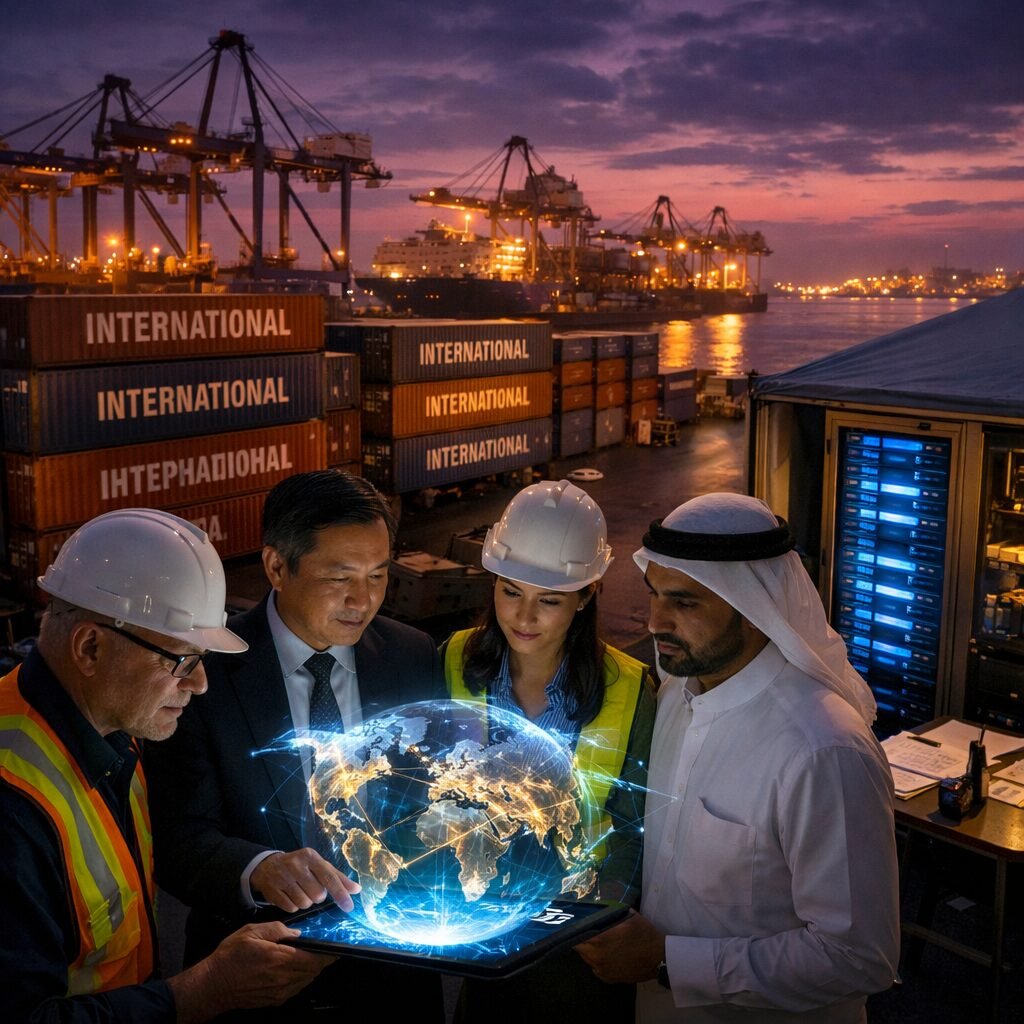
A single word remakes the rules
There are many words that promise scale. Few have the quiet power of “International.” Once a descriptive adjective, it has mutated into a strategic asset: a brand, a legal manoeuvre and, increasingly, a commercial firewall. This article traces how companies, trade bodies and even cities deploy the word “International” not just to signal cross-border activity, but to reconfigure how goods, services and data move.
The shift is subtle because it looks like continuity. A logistics firm that calls itself “International” still ships pallets. A bank with “International” on its brass plate still lends money. Yet the label now signals a bundle of expectations—regulatory flexibility, reputational heft and preferential market treatment—that can alter incentives for competitors and regulators alike.
Jurisdiction shopping: the new art of being ‘International’
Companies are increasingly rewriting corporate structures around the idea of being “international” in the legal sense: multiple registrations, trust layers and operational hubs that together reduce exposure to any single national regime. The result is not merely tax planning; it is a redefinition of responsibility.
This isn’t just for multinationals. Mid-sized firms are adopting lightweight, cross-border shells to claim international status, gaining easier access to global marketplaces and more favourable procurement lists. Governments respond by chasing after base erosion and profit shifting, but the race is already changing the ledger—market access now partly hinges on the right combination of registrations, licences and the simple cachet of the word “International.”
Cultural supply chains: how “International” reshapes creativity
Beyond law and tax, “International” is redefining cultural production. Film festivals, galleries and music labels are curating “International” editions as distinct products: projects created across borders with bespoke funding and distribution models. These offerings command different algorithms on streaming platforms, different festival circuits and different sponsorship pools.
The effect is a double-edged sword. Artists gain global scaffolding quickly, but platforms and funders increasingly prefer projects that can be labelled “International”, skewing creative incentives. The industry formerly called cultural exchange is shifting towards modular, export-ready art designed to travel with minimal translation—literally and figuratively.
Data sovereignty and the international data trust
Perhaps the most consequential twist: “International” is being used to curate data flows. Corporations and consortia are experimenting with “international data trusts”—governed repositories that sit between jurisdictions and promise standardised privacy controls and cross-border portability. These trusts allow firms to claim compliance with multiple regulatory regimes while sharing intelligence across subsidiaries.
That architecture changes competition. Smaller firms without access to such trusts are shut out of the best analytics; regulators must decide whether these trusts are collaborative public goods or private fortresses. European regulators, for example, are watching closely as businesses balance GDPR compliance with the desire to operate an “international” data commons. See discussions at EU data governance and experiments by industry consortia.
Marketplace design: labels that gatekeep
Marketplaces and procurement platforms now use “International” as a filter and a credential. Tender documents will award points for an “international presence”; marketplaces will apply different fee schedules to “international” sellers. The label functions as a gatekeeper—sometimes deservedly, sometimes manipulatively.
The consequence is what economists call endogenous standards: buyers and platforms shift preferences to the label itself, making it self-reinforcing. Firms thus invest in the appearance and mechanics of being international—local offices, internationalised websites, compliance reports—sometimes with marginal operational difference but significant market advantage.
Policy crossroads and the ethics of the word
Policymakers must choose whether to treat “International” as merit or cloak. One approach is transparent standards: define what qualifies as international activity for procurement, taxation and cultural funding. Another is to accept it as a market signal and regulate downstream harms—labour arbitrage, data opacity, cultural homogenisation.
Ethically, the key question is accountability. If being “International” dilutes responsibility, then global actors must face new forms of liability and oversight. If, instead, the label fosters genuine collaboration, then regulators should lower frictions and standardise recognition. The stakes matter: trade, culture and data governance will be shaped as much by semantics as by statutes.
Looking forward: practical adaptations for firms and regulators
For businesses: “International” will be a strategic decision, not merely branding. Firms should audit whether the advantages they seek—market access, data portability, cultural cachet—need the full legal and operational complexity that the label implies.
For regulators: the task is not to ban the word but to anchor it. Clear standards, interoperable data rules and procurement criteria can prevent the word from becoming a loophole. Collaboration between jurisdictions and industry-led transparency initiatives will determine whether “International” becomes a force for inclusion or a barrier wrapped in cosmopolitan language.