
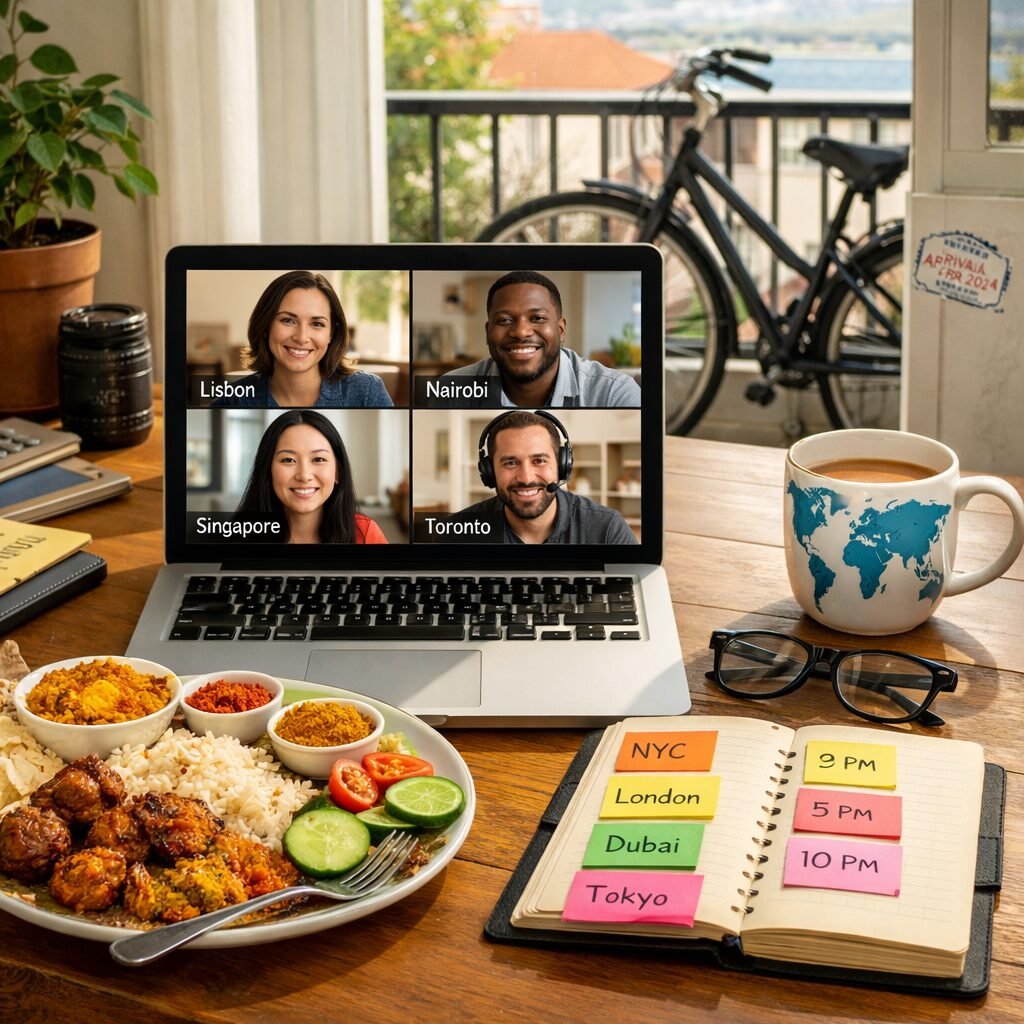
When “International” Shrinks to a Daily Habit
We often treat ‘international’ as a travel itinerary or trade headline. But in modern life it has become a set of micro-habits that fold globality into the rhythm of the day. Commuters listen to podcasts produced in three different countries. Kitchen cupboards are stocked with spices traded across continents. Team stand-ups include colleagues in three timezones who sign off with culturally distinct salutations.
This is not grand geopolitics; it is the banal, persistent weave of the international into domestic routines. Recognising this shift repositions ‘international’ from an external event to an internal design principle that shapes productivity, creativity and wellbeing.
Timezone Choreography: Designing Your Day Across Continents
Modern workflows demand timezone choreography — the deliberate scheduling and ambient structuring of time to accommodate global collaborators without burning out. Instead of treating clocks as hurdles, savvy professionals use them as instruments. Morning deep work sessions are aligned with late afternoons in Asia to exchange polished deliverables; late-morning calls favour transatlantic overlaps that require only two hours of compromise.
Tools can help, but the core practice is human: establish predictable overlap windows, colour-code calendars by region, and create ‘timezone rituals’ — brief rituals that signal the mind to switch cultural context (for example, a five-minute language warm-up before a meeting with a non-native team). These rituals reduce cognitive friction and preserve local routines while enabling fluid international engagement.
Cultural APIs: Interfacing With People, Not Stereotypes
Think of cultures as APIs — not monolithic blocs but sets of predictable responses and expectations that teams can learn to query efficiently. A cultural API approach teaches workers to ask three simple questions before international interactions: what response format is expected (direct vs contextual), what timeframes are normal for decisions, and which rituals signal respect. Document these ‘endpoints’ in team guides and update them as you learn.
This method reframes cultural literacy as a pragmatic interoperability problem rather than a moral exam. It encourages small, testable adaptations — changing meeting openers, adjusting follow-up cadence, or localising presentation examples — that compound into smoother collaborations without performing identity.
Micro-International Habits for Home and Office
Practical, repeatable habits let people live internationally without leaving their postcode. Examples include:
– ‘Language windows’ — ten-minute slots twice a week for passive listening in another language, which improve comprehension for meetings and travel.
– ‘Pantry diversity sessions’ — rotating one international recipe a week to boost curiosity and provide conversation fodder for multicultural colleagues.
– ‘Document localisation checklist’ — three quick checks (date formats, units, examples) appended to every shared file to avoid small but costly misunderstandings.
– ‘Ethical import audit’ — a quarterly check on where products come from and their social impact, turning consumption into informed practice.
These micro-habits are low-cost, high-return ways to normalise international considerations in everyday life and work.
The Environmental and Legal Edge: Thinking Globally About Costs
Integrating international practices also demands new guardrails. A truly modern workflow accounts for carbon cost, supply-chain resilience and regulatory variance. That means embedding a lightweight environmental rubric into procurement decisions and keeping a simple legal checklist for cross-border contracts and data transfers.
Businesses that ignore these dimensions may find their ‘international’ conveniences become liabilities. The forward-thinking alternative is a friction-aware mindset: optimise for low-friction international exchange, but automate checks for environmental and legal risk so global routines scale responsibly.
Living Borderless, Thoughtfully
The surprise of the 2020s and early 2020s was not that the world connected, but that connection became mundane. The next leap is not bigger borders but smarter habits: timezone choreography, cultural APIs, micro-international rituals and responsible global accounting.
Adopting these practices turns international from an occasional event into a reliable asset of daily life — one that expands creativity, resilience and perspective without demanding heroic effort. In a world where your work inbox can host five cultures in a single thread, the most modern skill is designing a life that treats ‘international’ as infrastructure, not interruption.